
How two connected covers turned a run of songs into a visual story
The first image
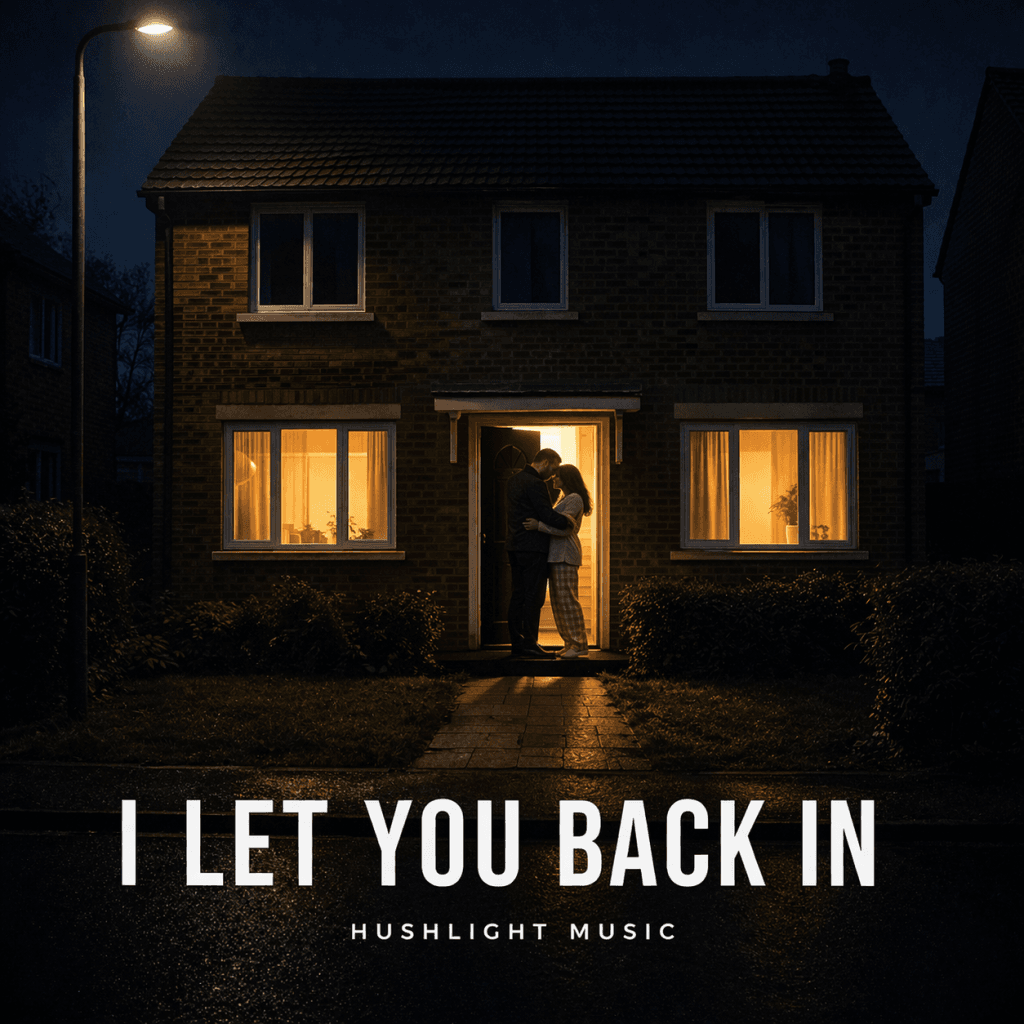
The cover for “I Let You Back In” starts with a familiar symbol: a house with the lights on and the door open.
An open door can mean welcome, risk, forgiveness or unfinished business. That uncertainty suited the song. The image does not tell the listener whether returning is wise. It simply captures the moment in which return becomes possible.
The house matters because it feels lived in. The lights suggest warmth and emotional presence. This is not an abandoned place or a memory that has completely faded. Something still exists inside, which makes the open doorway more powerful.
Returning to the same visual world
When “Doesn’t Change” reached its final form, creating an entirely unrelated cover would have missed an opportunity. The song did not feel separate from what came before. It felt like the answer that arrives later.
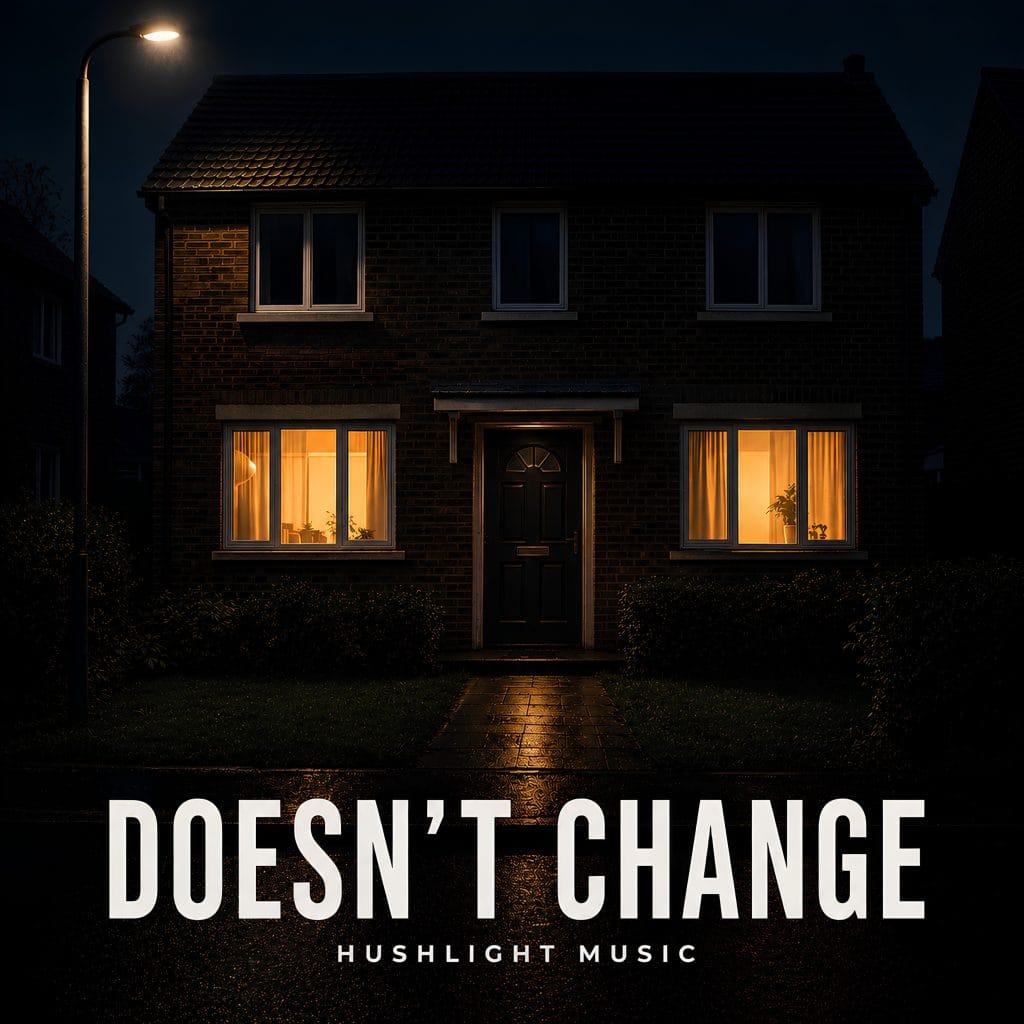
So the visual idea returned to the house—but changed one essential detail.
The door is closed.
The lights remain on
Closing the door could have turned the image cold or empty, but keeping the house illuminated made the meaning more precise.
The closed door does not say that nothing was felt. It does not erase what happened inside, and it does not turn warmth into darkness. It says that life continues behind the boundary.
That distinction is at the centre of “Doesn’t Change.” A decision can be final without pretending the past meant nothing. The light remains; the access does not.
Why connected artwork matters
Cover art is often treated as packaging added after a song is finished. For HUSHLIGHT MUSIC, the stronger approach is to make the image carry part of the emotional work.
Listeners may first meet a release as a small square on a phone. A strong cover should create a feeling before the track starts and reveal more after the song is heard. When two covers speak to one another, that effect becomes even stronger.
The open and closed doors create a simple before-and-after relationship:
- The first image asks whether someone should be allowed back in.
- The second shows that the decision has finally been made.
Neither cover explains every detail. Like the songs, they leave space for the listener’s own story.
A visual full stop
The closed door is not merely a darker remake of the first cover. It is the visual full stop at the end of the recent release sequence.
Same house. Same light. Different boundary.
Sometimes the smallest visual change says the most.
Which image speaks to you more—the open door or the closed one? Revisit “I Let You Back In”, stream “Doesn’t Change”, follow HUSHLIGHT MUSIC on Spotify, and share your answer.


